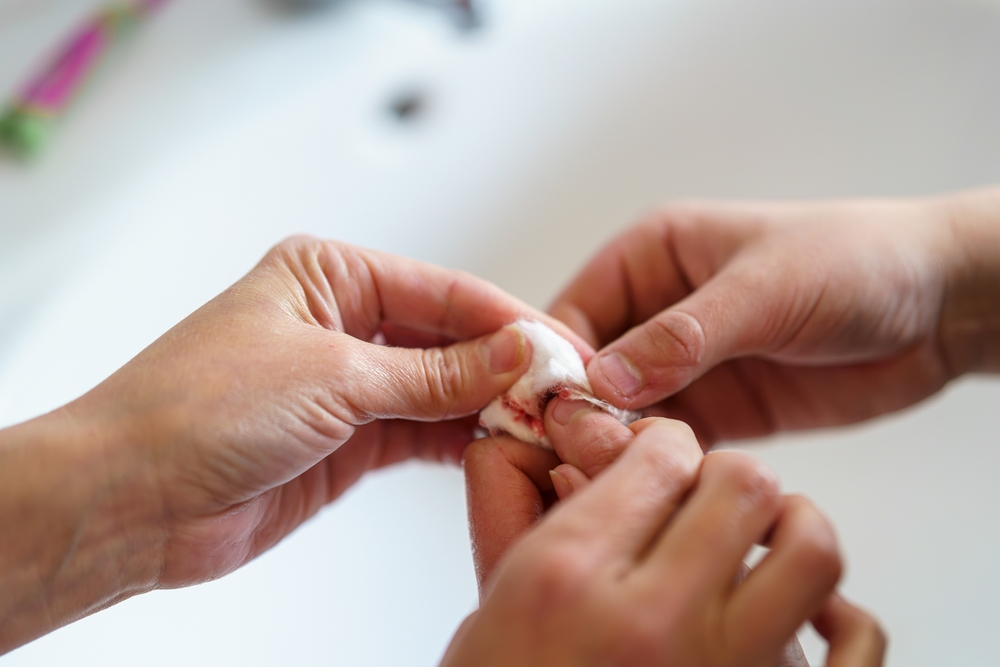
A finger tendon injury may look like a simple cut on the outside, but underneath the skin, the damage can be much more serious. A sharp knife, broken glass, power tool, or workplace accident can completely cut a tendon that allows the finger to bend or straighten. Without treatment, even a small tendon injury can lead to permanent loss of motion and hand function.
Many people assume that if the bleeding stops and the wound is closed, everything will heal on its own. Unfortunately, tendons do not simply reconnect by themselves after they are completely torn. That is why prompt evaluation and treatment are so important.
Dr. Robert Kratschmer, board certified plastic surgeon, treats traumatic hand injuries, including finger tendon lacerations and tendon repairs. Early diagnosis and timely surgery often provide the best opportunity to restore movement and function.
What Is a Finger Tendon?
Tendons are strong, cord-like structures that connect muscles to bones. When the muscles in your forearm contract, the tendons pull on the bones of your fingers, allowing them to bend and straighten.
Each finger contains multiple tendons working together. Flexor tendons bend the fingers into the palm, while extensor tendons straighten the fingers. Damage to either type of tendon can make simple activities surprisingly difficult.
Even though the injury may involve only one finger, it can affect grip strength, coordination, and the ability to perform everyday tasks.
How Do Tendon Injuries Happen?
Finger tendon injuries are most commonly caused by sharp objects or trauma. Kitchen knives, utility knives, broken glass, machinery, table saws, hedge trimmers, and industrial equipment are frequent causes.
Sports injuries and crush injuries can also tear tendons. Sometimes the tendon is cut completely. Other times it is only partially torn.
Because tendons lie just beneath the skin in certain parts of the hand, even a relatively small laceration can completely divide a tendon.
Signs of a Tendon Injury
Some tendon injuries are obvious. Others are easy to miss.
Common symptoms include:
- Inability to bend or straighten part of the finger
- Weakness when trying to move the finger
- Pain after a deep cut
- A finger that stays bent or straight unexpectedly
- Swelling
- Tenderness
- An open wound over the finger or hand
One important point is that pain does not always match the severity of the injury. Some patients have very little pain but cannot fully move the finger. Others assume stiffness is simply due to swelling when the tendon has actually been cut.
Any finger injury that results in loss of motion deserves immediate medical evaluation.
Why Tendon Repairs Should Not Be Delayed
Unlike skin, tendons cannot reliably heal together after a complete laceration without surgery.
As time passes, the tendon ends begin to pull apart. Scar tissue forms, making later repair more difficult. Delayed treatment may require more complex reconstruction instead of a straightforward repair.
Prompt treatment also helps reduce stiffness, improve healing, and maximize the chance of regaining finger motion.
Dr. Robert Kratschmer, plastic surgeon in Houston, evaluates tendon injuries carefully because treatment decisions depend on the location of the injury, the amount of tendon damage, and whether nerves, blood vessels, or bones were also injured.
What Happens During Finger Tendon Repair?
During tendon repair surgery, the surgeon carefully identifies the injured tendon and reconnects the torn ends using specialized suturing techniques designed specifically for tendon healing.
The repair must be strong enough to allow healing while protecting the tendon from excessive stress during recovery.
If additional injuries are present, such as nerve lacerations, fractures, or damaged blood vessels, they may also be repaired during the same operation.
Every injury is unique, and the surgical plan is customized based on the patient’s specific needs.
Recovery Takes Patience
Many patients believe surgery is the hardest part. In reality, recovery often requires just as much commitment.
Unlike a broken bone that simply needs time to heal, tendons require a careful balance between protection and movement.
Too much motion too early can cause the repair to fail.
Too little motion can lead to stiffness and scar tissue that limit finger movement.
Finding that balance is one of the most important parts of recovery.
The Importance of Hand Therapy
Hand therapy is one of the biggest reasons modern tendon repairs achieve good results.
Specially trained hand therapists guide patients through exercises designed to protect the repair while gradually restoring motion.
Patients often wear a custom splint during the first several weeks after surgery. The splint protects the tendon while allowing carefully controlled movement.
Therapy usually progresses through several phases as healing improves.
Although recovery takes time, following the therapy program consistently gives the repaired tendon the best opportunity to regain strength and motion.
How Long Does Recovery Take?
Recovery depends on the type of tendon that was injured, the severity of the injury, and whether other structures were damaged.
Most tendon repairs require several months before patients regain their maximum function.
The tendon itself generally heals over the first several weeks, but rebuilding strength, flexibility, and coordination continues much longer.
Patients who perform heavy manual labor or repetitive hand work often require additional recovery time before returning to unrestricted activity.
Patience during this period is extremely important because tendons continue strengthening long after the incision has healed.
What Happens If a Tendon Injury Is Not Treated?
An untreated tendon injury can significantly affect hand function.
Without a functioning tendon, the finger may permanently lose the ability to bend or straighten normally. Everyday tasks like writing, typing, gripping tools, opening jars, or buttoning clothing may become much more difficult.
Over time, joints can become stiff, muscles may weaken, and scar tissue can make later reconstruction more challenging.
Early treatment generally offers the best chance for restoring normal movement.
Will My Finger Be Normal Again?
This is one of the most common questions patients ask after tendon repair.
Every injury is different, so there is no single answer.
Many patients regain excellent function following surgery and rehabilitation. Others may experience some lingering stiffness or reduced motion, particularly after severe injuries involving multiple structures.
The severity of the original injury, the timing of surgery, participation in hand therapy, and individual healing all influence the final outcome.
Dr. Robert Kratschmer, Texas plastic surgeon, works closely with patients throughout recovery to help maximize both function and healing after tendon repair.
Protecting Your Hands Matters
Many tendon injuries happen during everyday activities that seem routine until an accident occurs. Using protective equipment, exercising caution with sharp tools, and following workplace safety guidelines can reduce the risk of serious hand injuries.
Even with careful precautions, accidents still happen. When they do, early evaluation can make a significant difference.
If you are unable to fully bend or straighten a finger after a cut or traumatic injury, do not assume it will improve on its own. Prompt treatment gives the repaired tendon the best opportunity to heal properly and restore hand function.
If you would like to learn more about finger tendon repair, hand injuries, or reconstructive hand surgery, you can contact the office of Dr. Kratschmer, board certified plastic surgeon, at 281-317-8179 (phone), 855-922-3330 (text) or online at CarpalTunnelMD.com.
Disclaimer: This blog is meant for informational purposes only. Individual results, needs, and outcomes can vary. Consultation with a board-certified professional like Dr. Kratschmer is always recommended to address personal concerns and conditions. This article should not constitute medical advice. Images shown may be of models and not actual patients.
#FingerTendonRepair #HandSurgery #HandInjury #FlexorTendon #ExtensorTendon #TraumaticHandInjury #ReconstructiveSurgery #CarpalTunnelMD #HoustonHandSurgeon #DrRobertKratschmer


Leave a Reply